
How to Start Stock Investing for Beginners - Full Guide
No mentor, no financial background, and a $5,000 loss before I figured it out. This is the guide I wish I’d had.
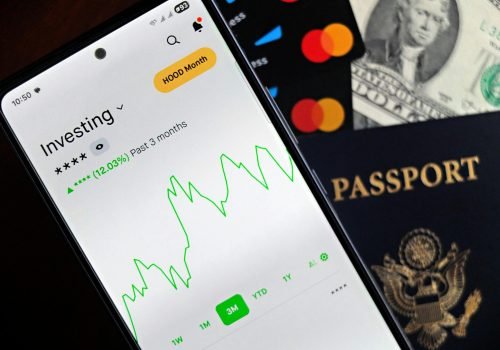
How I lost $5,000 and what it taught me
When I was 15, I wanted to get rich. Investing seemed like the fastest way in. The problem? I knew nothing about it, had no one to guide me, and barely anything in my bank account.
I read investment books and studied how Warren Buffett picked stocks. Then one day, a friend told me about a “life-changing” fintech company he was convinced would double our money. I didn’t know how to analyse a stock, let alone read a financial statement, but I trusted him. So I went all in.
A year later, I was down 20%. Three years later, down 80%. Five years later, the $5,000 I’d put in was barely worth anything. It stung, but it didn’t stop me. I enrolled in a banking and finance diploma in high school, graduated as the top scorer, and eventually made back my losses and then some. This post is everything I wish I’d known from the start.
By the end, you’ll have a clear starting point and a roadmap for making your first $10K in the market.
Get your financial foundation right first
Before you buy your first stock, sort out your financial foundation. This isn’t the exciting part, but it’s the part that separates people who build real wealth from those who get burned early and give up.
Everyone starts investing from a different place. Some people are in their 20s with few commitments and a hunger to grow fast. Others are juggling a mortgage, kids, and a career, squeezing every spare dollar. Neither is better or worse. What matters is that you build from where you are, not where someone else is.
1. Clear your high-interest debt first
If you’re carrying credit card or personal loan debt at 15 to 25% interest, paying it off is the best “investment” you can make. No stock market return can reliably beat that rate. Wiping out 20% interest debt is the same as earning a guaranteed 20% return, and you won’t find that anywhere on the market.
2. Build your emergency fund
Life happens. Job losses, medical bills, car breakdowns. Without a financial cushion, any of these can force you to sell your investments at the worst possible time. Set aside 3 to 6 months of living expenses in an account you can access quickly. If you have dependents or an unpredictable income, lean towards the 6-month end. This fund isn’t your portfolio; it’s your peace of mind.
For myself i tend to keep 10-20% of my portfolio in cash just in case of rainy days or cash to buy when the stock market crashes.
3. Figure out how much you can realistically invest
Once your debt is under control and your emergency fund is in place, look honestly at your monthly cash flow. After rent, food, bills, and the things that genuinely matter to your quality of life, what’s left? Even $50 or $100 a month is enough to start. Investing isn’t a game for the wealthy; it’s a habit that builds wealth. Small, consistent contributions compound powerfully over time.
Pro tip: Your financial foundation is your superpower. Build it first and you’ll be able to invest with confidence rather than fear.
Understand the basics (no jargon)
Before you put a single dollar in, you need to understand what you’re actually buying. Not to become a finance expert, but because understanding the basics keeps you calm when things get volatile and confident when opportunities appear.
What is a stock, and why does the price move?
When a company wants to grow, it needs capital. One way to raise it is to sell small pieces of ownership to the public. Each piece is called a stock, or a share. Buy a stock and you become a part-owner of that company, no matter how small your slice.
The price moves based on supply and demand, driven by expectations. If people believe a company will grow and earn more in the future, demand for its shares rises and so does the price. If confidence drops, people sell and the price falls. News, earnings reports, interest rates, global events – all of these shift how people feel about a company’s future.
When a company wants to grow, it needs capital. One way to raise it is to sell small pieces of ownership to the public. Each piece is called a stock, or a share. Buy a stock and you become a part-owner of that company, no matter how small your slice.
The price moves based on supply and demand, driven by expectations. If people believe a company will grow and earn more in the future, demand for its shares rises and so does the price. If confidence drops, people sell and the price falls. News, earnings reports, interest rates, global events – all of these shift how people feel about a company’s future.
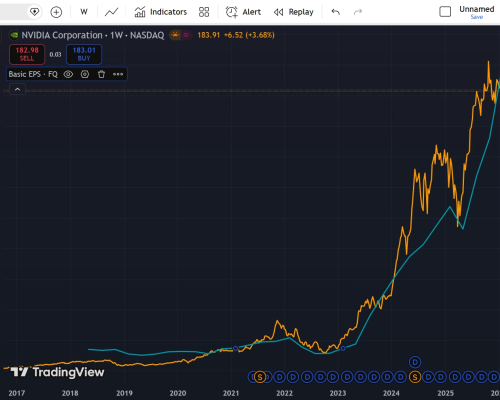
Pro tip: Earnings and stock price tend to move together. When earnings per share (EPS) rises, the stock price typically follows, because investors will pay more for a company they believe is becoming more profitable.
Stocks vs. ETFs vs. index funds
A stock is ownership in one company. Your investment rises and falls with that company alone.
An ETF (Exchange-Traded Fund) is a basket of many stocks bundled together and traded like a single stock. Instead of picking one company, your money is spread across many at once.
An index fund is similar to an ETF, but specifically designed to mirror a market index like the S&P 500, which tracks America’s 500 largest companies. When people say “just invest in the index,” this is what they mean. You’re not betting on one company winning; you’re betting on the economy growing over time.
For most beginners, ETFs and index funds are the smarter place to start. Less risk, lower fees, and no need to research individual companies.
Risk vs. reward - what diversification actually means
You’ve heard “don’t put all your eggs in one basket.” That’s diversification in a nutshell. If all your money is in one stock and that company has a bad year, your entire portfolio suffers. But if your money is spread across 500 companies in tech, healthcare, and energy, a single company failing barely moves the needle.
Higher potential reward almost always comes with higher risk. Individual stocks can 10x, but they can also go to zero. Index funds grow more slowly, but they rarely collapse entirely because they’re tied to the broader economy rather than a single bet.
Pro tip: As a beginner, your goal isn’t to find the one stock that makes you rich overnight. It’s to build a portfolio that grows steadily and survives the inevitable bumps along the way. Diversification is how you do that.
Your first investment strategy
You’ve sorted your financial foundation and you understand the building blocks. Now comes the part everyone’s been waiting for: putting your money to work.
Here’s what most beginners get wrong. They spend weeks hunting for the “perfect” stock, paralysed by the fear of making a wrong move. The best strategy for a beginner isn’t about finding hidden gems or timing the market perfectly. It’s about being consistent, patient, and deliberately boring.
Start with index funds
When you invest in an S&P 500 index fund, you’re not betting on one company. You’re betting on the 500 biggest companies in America continuing to grow. Amazon, Apple, Microsoft, Google – they’re all in there. Historically, the S&P 500 has returned around 10% per year over the long run. Some years are up 25% and some years it drops, but zoom out a decade and the trend has always pointed upward.
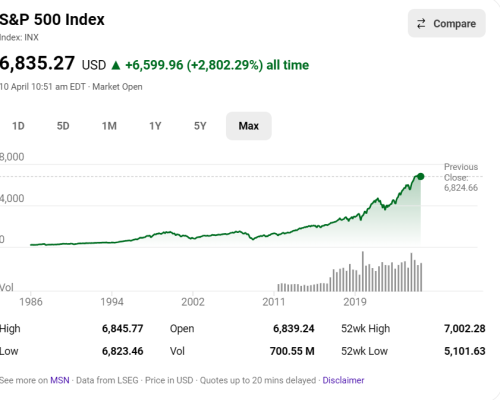
You don’t need to pick winners, follow earnings calls, or read quarterly reports. You simply invest regularly and let the market do what it has always done over time. One or two broad index funds is more than enough to start building real wealth. Keep it simple, because complexity is not the same as sophistication.
Dollar-cost averaging - the strategy that removes emotion
Dollar-cost averaging (DCA) means investing a fixed amount at regular intervals, say $200 every month, regardless of what the market is doing. When prices are high, your $200 buys fewer shares. When prices are low, it buys more. Over time, this smooths out the natural ups and downs of the market.
The real power of DCA is psychological. It removes the temptation to wait for the “perfect moment” to invest. That perfect moment never comes. Set up an automatic monthly transfer into your index fund, then forget about it. That discipline, repeated over years, is where real wealth is built.
Think in decades, not days
Social media is full of people posting about the stock that doubled in a week. What you don’t see are the hundreds who lost money chasing the same thing. The highlight reel is never the full picture.
The most powerful force in investing isn’t a hot tip; it’s compound growth over time. Here’s a simple example: invest $300 a month from age 25 at an average 8% annual return, and by age 55 you’ll have contributed $108,000 of your own money. But your portfolio would be worth over $400,000. The extra $300,000 didn’t come from working harder. It came from time.
The market will dip. Scary headlines will come. Every instinct will sometimes tell you to sell. The investors who build real wealth aren’t the ones who reacted; they’re the ones who stayed the course.
My personal strategy - invest in what you know
Most people scour Reddit looking for the next big stock. I don’t invest in companies I’ve only read about in a post, because if I don’t understand the business, I can’t project its earnings, and if I can’t project its earnings, I can’t project where the stock is going. That’s exactly what happened with the fintech tip from my friend.
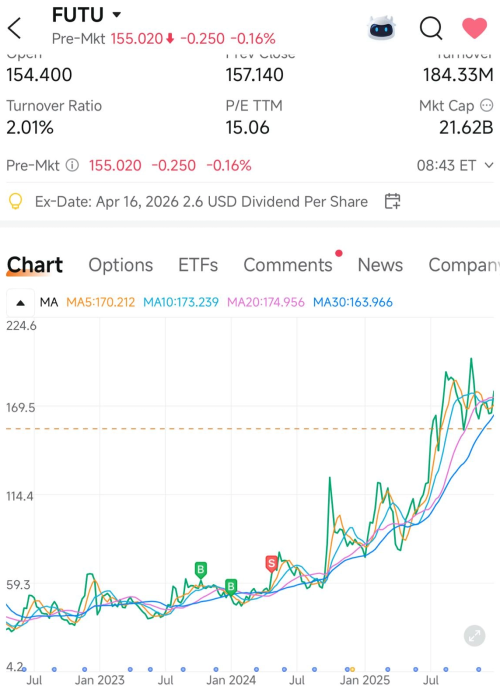
Instead, I look for ideas in my own daily life – products I actually use. Three years ago, the brokerage app MooMoo (FUTU) was getting popular in Singapore. The stock was beaten down due to a Chinese regulatory crackdown, making it cheap and undervalued!! But I could see its user growth firsthand, and I knew that meant more revenue ahead. I put in $1,000. Today, I’m up almost 200%.
The principle: Invest in what you understand. Familiarity with a product gives you an edge most people overlook.
Common beginner mistakes to avoid
I’ve seen these play out over and over again, including in my own portfolio. None of them are signs of stupidity. They’re signs of being human. Knowing them in advance, though, puts you miles ahead of where most people start.
Mistake 1: Panic selling during dips
You invest $1,000. A month later, it’s worth $870. Your stomach drops and every instinct says get out before it gets worse. So you sell, and two months later the market recovers. Your $1,000 would have grown to $1,150. Instead, you locked in a $130 loss and missed the entire rebound.
This is the most common and costly beginner mistake. A 10 to 20% market dip happens roughly every one to two years. It is not a crisis; it’s a sale. The investors who build wealth are the ones who stay in their seat when it’s uncomfortable and let time do the work.
elit. Ut elit tellus, luctus nec ullamcorper mattis, pulvinar dapibus leo.
Mistake 2: Trying to time the market
“I’ll wait until it drops a bit more.” “I’ll invest once things settle down.” “Now doesn’t feel like the right time.” This kind of thinking keeps more people out of the market than anything else. Even professional fund managers with entire research teams consistently fail to time the market reliably.
There’s a saying that’s stood the test of time in investing: time in the market beats timing the market. Every month you spend waiting for the “right” moment is a month of compounding lost forever. The best time to start was yesterday. The second best time is today.
Mistake 3: Investing money you can't afford to lose
The stock market is not a savings account. In the short term, your portfolio will go down in value. If you invest money needed for next month’s rent or a potential emergency, you may be forced to sell at exactly the wrong time, turning a temporary loss into a permanent one. Only invest money you’re genuinely comfortable leaving untouched for at least 3 to 5 years.
Mistake 4: Ignoring fees and taxes
A fund charging 1.5% in annual fees versus one charging 0.1% sounds like a trivial difference. Over 30 years on a $50,000 investment, that gap could cost you tens of thousands in lost returns. Always check a fund’s expense ratio before investing. For index funds, low fees are one of their biggest advantages, with many charging as little as 0.03% to 0.20% annually.
Also understand how capital gains tax works in your country. Long-term holdings are often taxed more favourably than short-term ones yet another reason patient investing tends to win. And don’t dismiss small amounts: $10 a month reinvested at 10% per year compounds to a surprisingly $20,480 over a decade!!!
Investing tools and resources I use
| Tool | What it’s for | Cost | Link |
|---|---|---|---|
| Alphaspread | Calculate the intrinsic value of a stock using discounted cash flow (DCF) | Free* | alphaspread.com |
| Macrotrends | Full company financial data and pre-calculated ratios | Free | macrotrends.net |
| Daily Investment Brief | Daily market news with the key moves explained clearly | Free | dailyinvestmentbrief.com |
| Daily Investment Brief — macro dashboard | A single-page view of the key economic indicators | Free | Economic Dashboard |
| MooMoo | Stock brokerage with P/E ratio comparisons and sector data built in | Free data / fees on trades | moomoo.com |
| Notion | Track what I’ve bought and document my reasoning for each position | Free | notion |
*Free up to 3 stocks per month
Where to go from here
The best time to start investing was yesterday. The second best time is today. For me, the simplest starting point was DCA-ing into an S&P 500 index fund while using the time to learn how to read financial statements and analyse individual stocks. That’s the approach that worked for me but everyone’s financial situation is different, so it’s worth doing your own research or speaking to a financial adviser before putting money in.
📊 Daily Investment Brief
Markets move fast. The Daily Investment Brief cuts through the noise and delivers the most important market movements, stock highlights, and economic shifts, summarised clearly every morning in under five minutes.
Read today’s brief →
🌐 Macroeconomic Dashboard
Understanding the bigger picture separates reactive investors from strategic ones. The Macroeconomic Dashboard gives you a real-time view of the indicators that drive markets — interest rates, inflation, GDP, and more — all in one place.